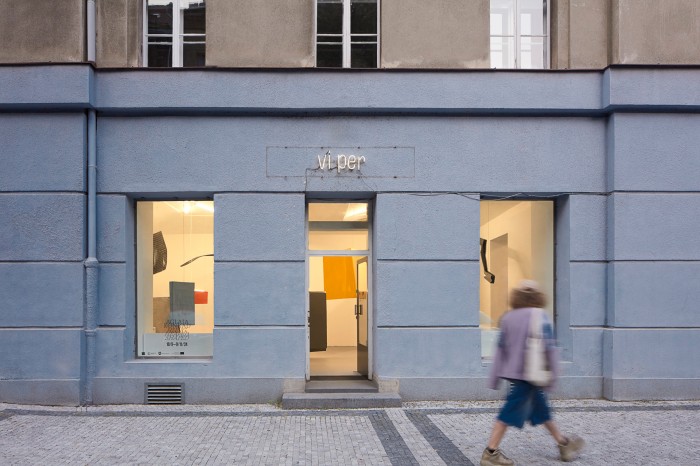
Aglaia Konrad: Hung, Heaped, Shaped
{~ '2024-09-18 00:00:00' | amDateFormat: 'D/M/Y' ~}–{~ '2024-11-09 00:00:00' | amDateFormat: 'D/M/Y' ~}
Curator: Irena Lehkoživová, Barbora Špičáková
Fracture(d), Fragmentary city, Fragmented city. And we can continue: Hell, Help(ful), Her city. Or Rot, Rückbaukristalle, Ruined city. Only a few of the possible verbal associations of the artist Aglaia Konrad in reaction to the urban environment in which we move every day.1 Many of these associations are equally visible in her current installation at VI PER Gallery.
In her photographs, films, and installations, Aglaia Konrad turns her attention, frequently and with great intensity, to architecture, the urban environment, or even space as such. During the shooting of architecture, urban space, and infrastructure, she refined her visual perception of all the inseparable individual components by necessity linked to designing, construction, but also to demolition and building anew. In recent years, she has become interested in the relation between destruction (buildings of the postwar period or entire urban districts) and reconstruction, or the new buildings arising on the same site. Her attention is concentrated on the processes often termed “retroactive building” (Rückbau), viewing “demolition as an unavoidable aspect of progress.” Rückbau, as a sculptural process, is an approach through which the artist understands demolition as an expansion of architectural practice and one where she involves physical building waste as a sculptural gesture in relation to the image. And in the term mentioned above, “Rückbaukristalle,” we see combined both demolition or destruction, and equally growth (crystals organically growing, reorganizing themselves).
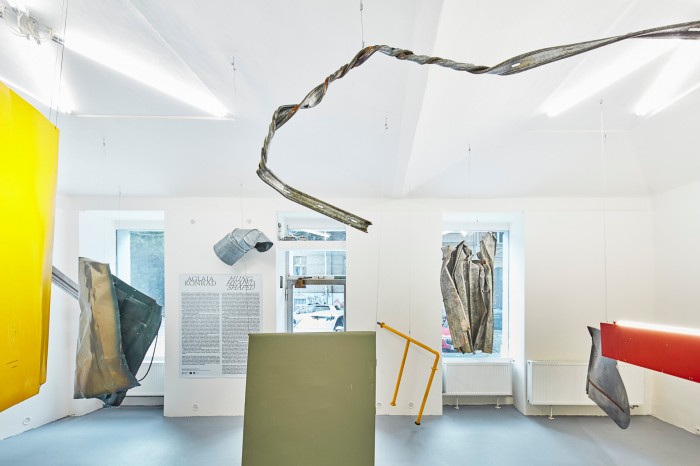
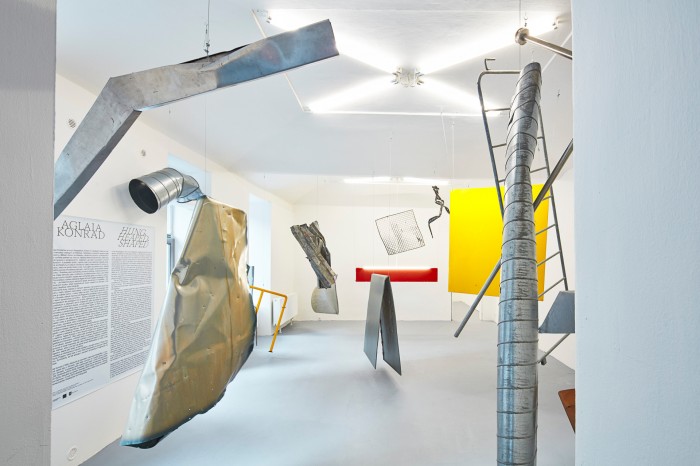
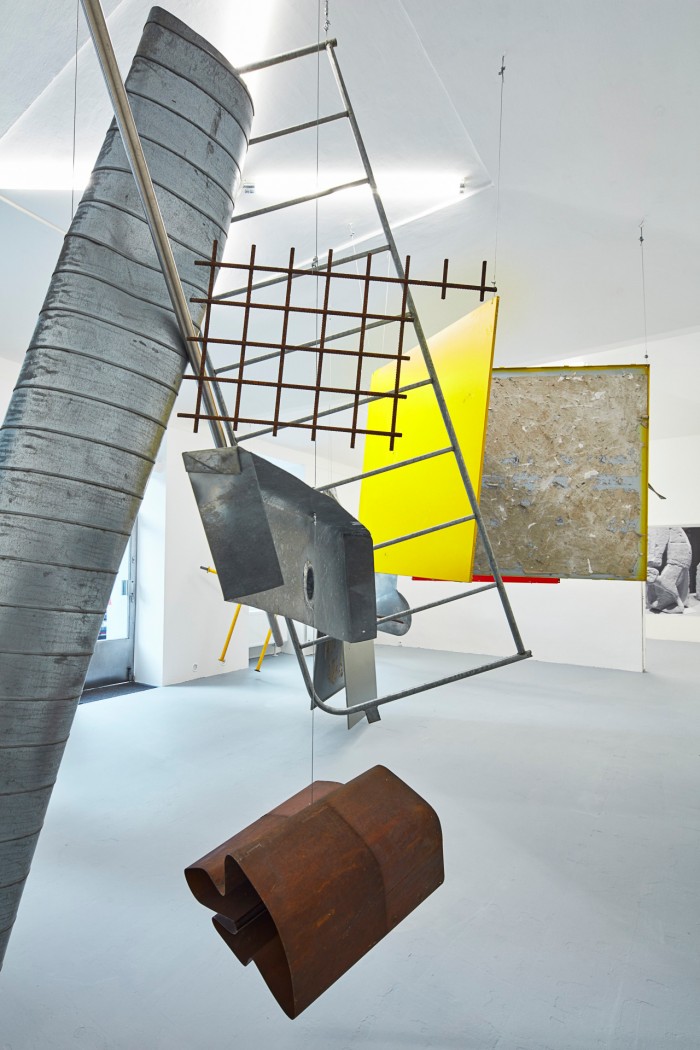
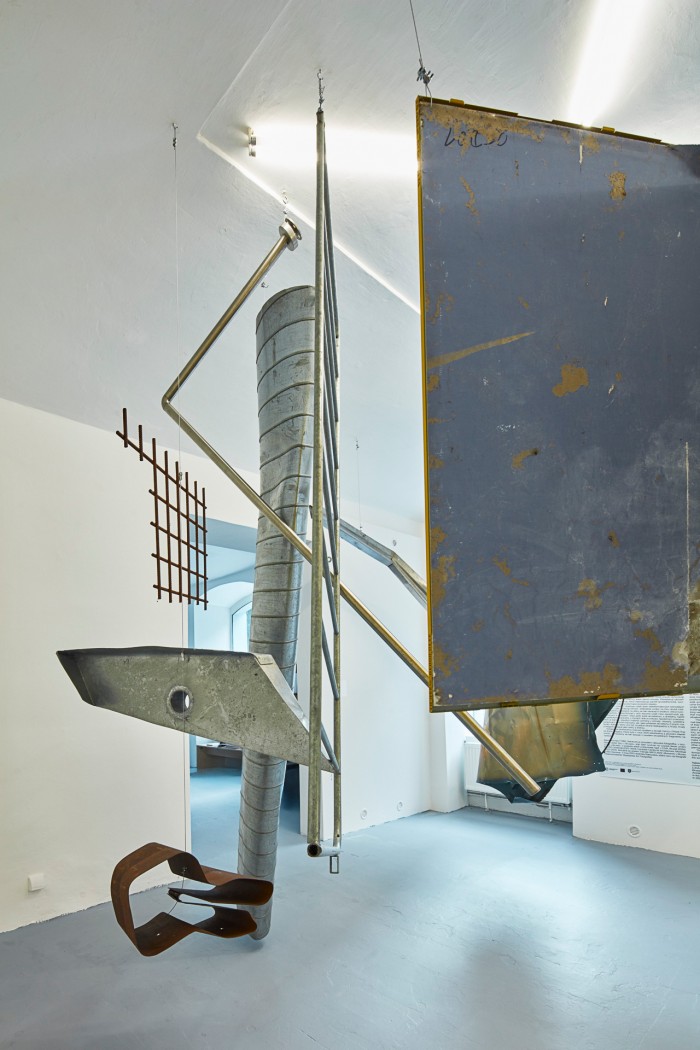
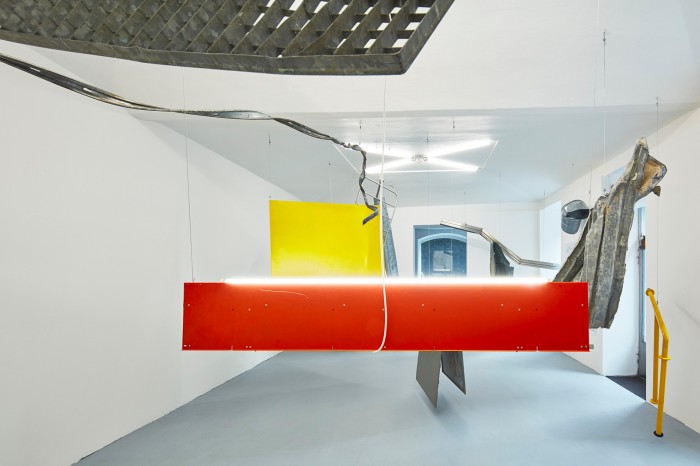
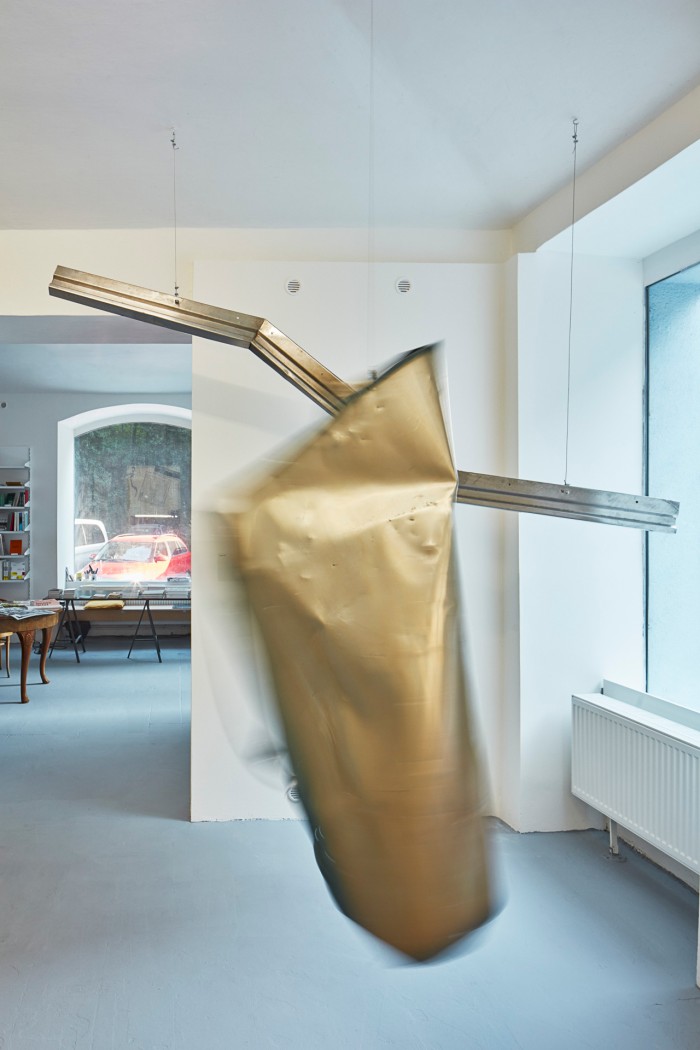
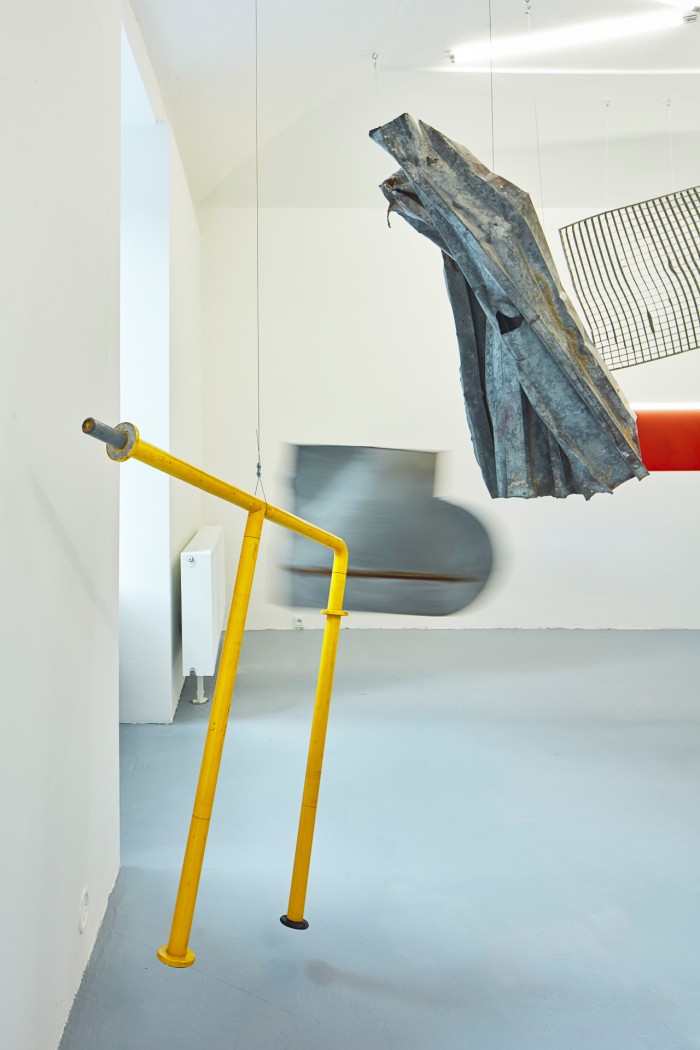
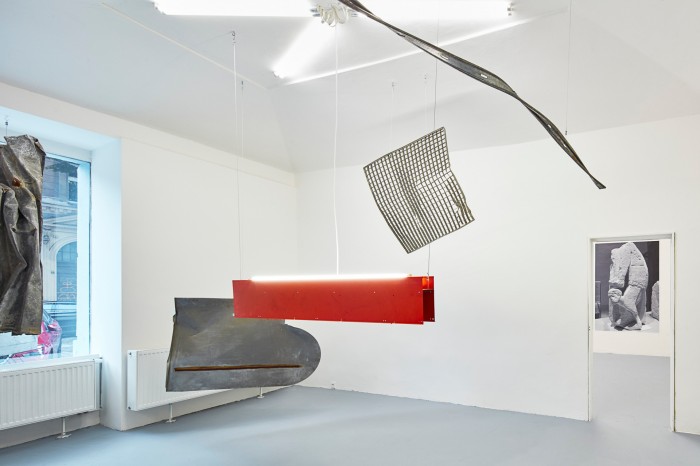
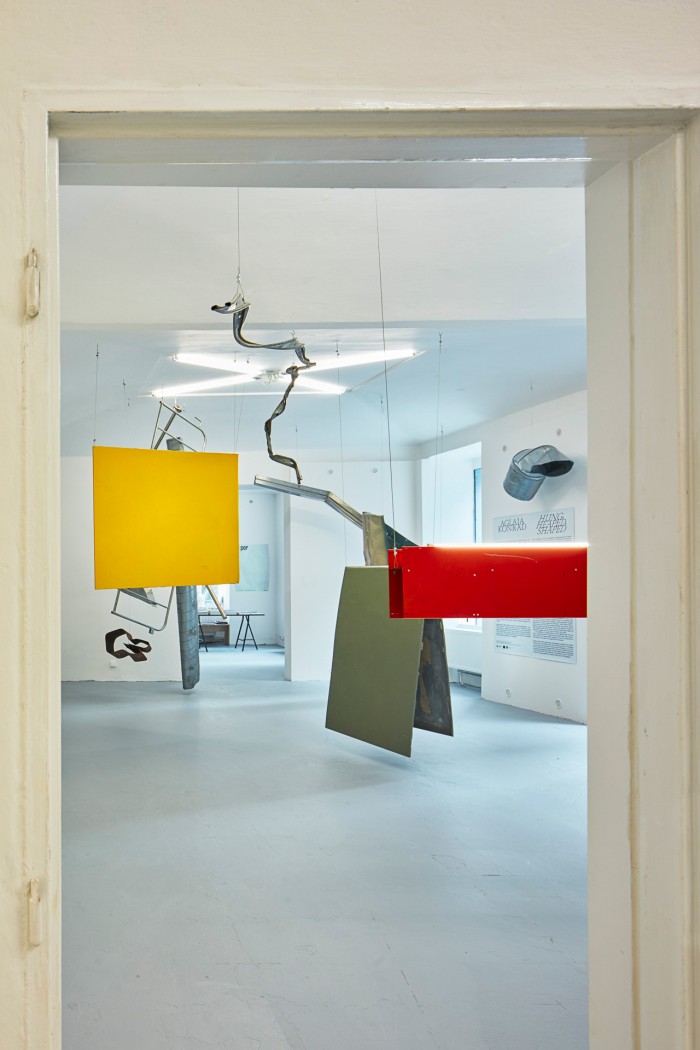
For her Prague exhibition, Aglaia Konrad has prepared an installation compiled out of fragments – architectonic elements of facades, structures, or fittings – from demolished buildings that she has collected in her travels around Brussels. Supplementing this installation is a series of photographs.
The collection of sizeable pieces of building waste from various demolitions began to emerge in the summer of 2020. All its items have similar traits: they were acquired from sites close to the building where the artist lives and works, they could be transported home by hand or using a bicycle they often involve scraps of metal, rubble, or other materials. The area of Brussels around the Gare du Nord / Brussels-Noord station, where all these fragments were found, has in recent years been subjected to a dynamic transformation. Demolition follows demolition, rebuilding follows rebuilding, streets are increasingly crammed with ever more oversized luxurious office or residential blocks. The senselessness of unbalanced progress, following the new concept and using the new marketing slogan of “mixed use.” High-rise buildings from the 1970s and 1980s, in a district unofficially known as “Little Manhattan,” are successively vanishing. Though only a few decades old, these structures, primarily commercial and administrative, are now as per post-capitalist logic and developers’ jargon outdated, unmodern, a hindrance to the site’s economic growth. A building’s lifespan is thus shorter and shorter. Structures that arose even at the start of the 1990s are now gone, replaced by expensive apartment suites in a concrete jungle, in a noisy environment with a minimum of greenery.
Precisely in this setting is where we can find Aglaia Konrad. It forms part of her day-to-day life and it is also where she finds the objects of her artistic interest or collector’s obsession. They come to her on their own; she refuses to seek them out deliberately, but they remain close to her in their fate and their immediacy. Scraps of destroyed buildings, bent, snapped-off, or otherwise reshaped by the force of the demolition machines and kept as they are, without further manipulation. Those found at the present exhibit are all from metal, one from iron, others from aluminum or copper. With different qualities, different colors, different sounds. In previous installations, the artist worked with them in the form of a single unified chain, whether vertical or horizontal. By contrast, at VI PER Gallery they are now grouped and positioned in a spatial installation as performative objects, ones we can walk around, we can touch and listen to the sounds they give off, perceive their shape, volume, mass, material, or watch their changes under the light in the indoor space as much as in the actual city. They create an architectural infrastructure of deformed shapes that passed through destruction and won themselves new qualities, characteristics, worth, value. This bank of materials underscores the unrelenting force of construction economics. These building-scraps, which we would otherwise normally fail to perceive or even to see, preserve the character of the place and of architecture long vanished. They represent a record of space and time, a monument that materializes the memory of the architectural, social, and economic situation of one specific locality.
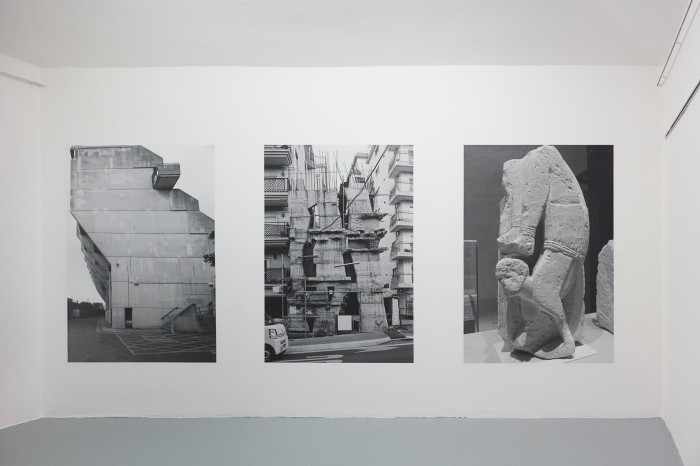
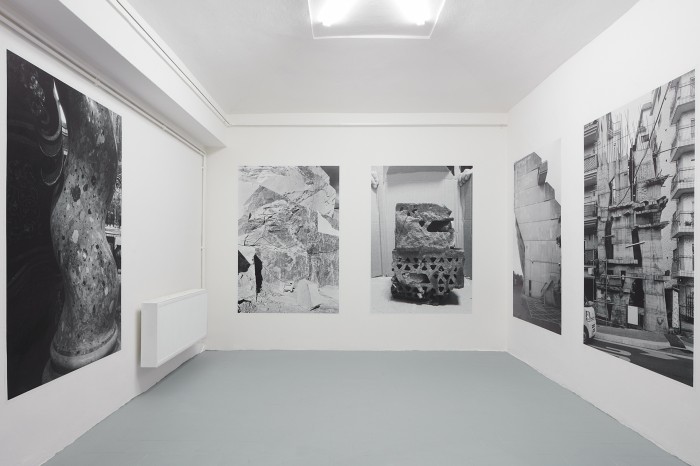
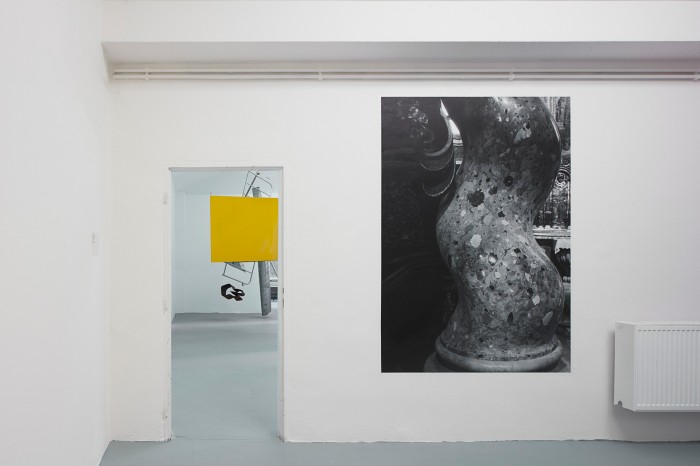
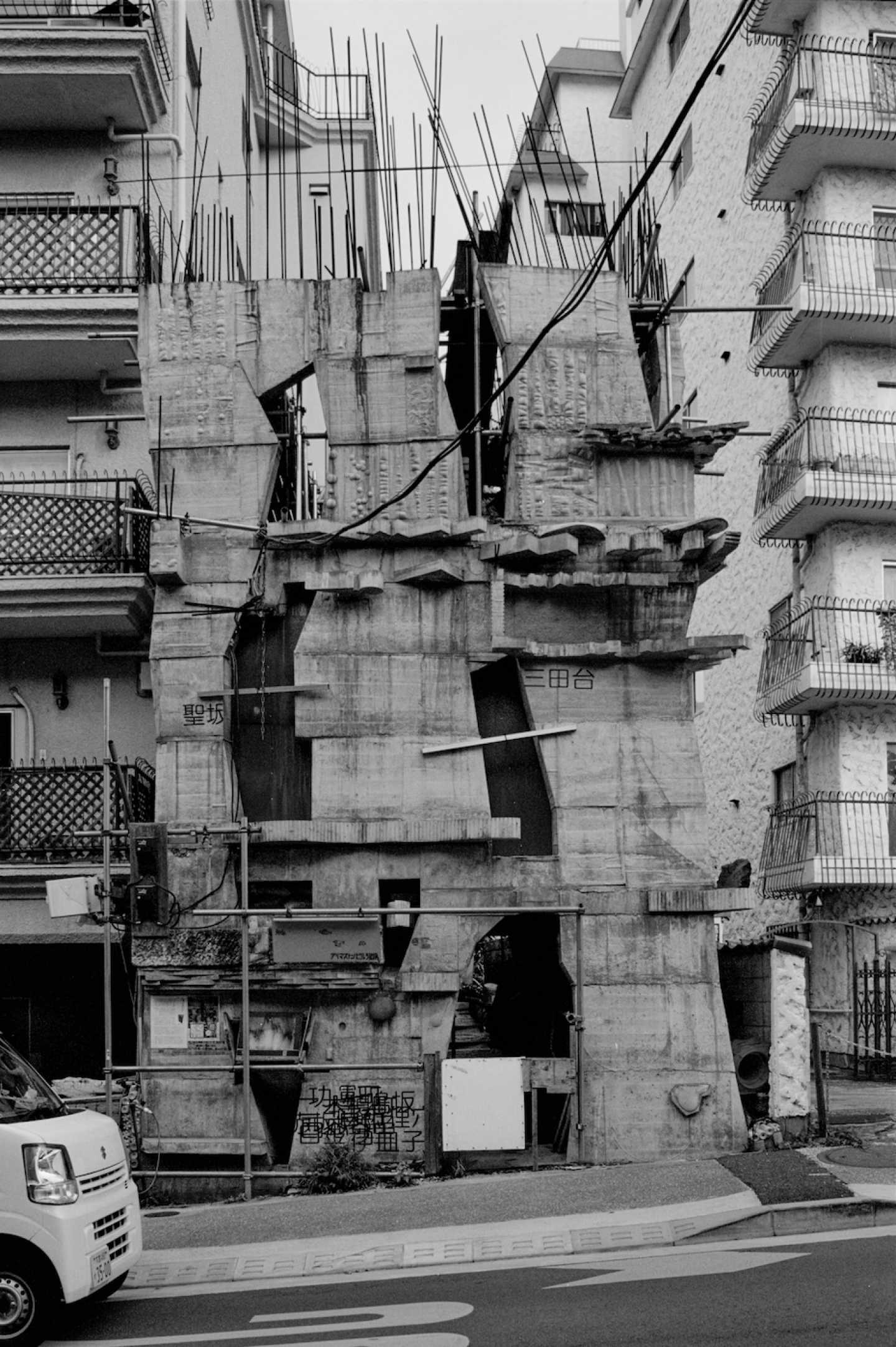
The central installation is supplemented with a selection of six large-format black-and-white photographs from the cycle Shaping Stones. In terms of their size, they were created specifically for the space of the second part of the gallery and thus address the viewer in a highly physical and direct way. These photographs have been taken successively since 2008 and in them, Konrad investigates the relationship between a society, its history, and the territories it inhabits or inhabited. Placed in confrontation with each other are architectures and artefacts crossing geographic borders, emerging from a variety of ages and civilizations. Their common denominator is stone, the construction material extracted from nature: carved, polished, worked, variously shaped, or even as an additive in cement or other materials. Stone, which can be in certain instances light, fragile, yet permanent, elegant, and at the same time heavy and coarse. Encountering each other side by side, for instance, we find a detail from the Italian quarry of Carrara, whose long history as a source of marble for sculpture and architecture reaches back to the Etruscans and ancient Rome, or a view of the windowless side façade of the Alexandra Road social housing complex in London, completed in 1978 in Brutalist style. Construction rubble gathered in Brussels lies next to a statue depicting the figure of an athlete from a Madrid museum; the Tokyo self-build known as Arimasutonbiru, an example of contemporary sculptural architecture, adjoins the Solomonic column of scagliola (imitation marble) from the Baroque Jesuit Church in Vienna from the early eighteenth century, recalling a sensual, bodily figure.
Aglaia Konrad (*1960, Salzburg) is a photographer originally from Austria, currently living in Brussels, where she also teaches at the art academy LUCA School of Arts, Brussels. Recently, she has exhibited, e.g., at CIVA, Brussels (2024); Mu.ZEE Oostende (2023–2024); Canadian Centre for Architecture, Montreal (2023–2024); Austrian Cultural Forum, Warsaw (2023); Künstlerhaus, Vienna (2023). She has also published several artist’s books, such as Japan Works (2021), Schaubuch: Skulptur (2017), Aglaia Konrad from A to K (2016), Desert Cities (2008), or Elasticity (2002). Currently, Aglaia Konrad is participating in the Triennale SEFO 2024: Moments in the Museum of Art in Olomouc. In 2023, she was awarded the Austrian State Prize for Photography (Österreichischer Staatspreis für Fotografie). https://aglaiakonrad.com/
Installation photos: Peter Fabo